How much of a digital-product workflow can be made systematic, reproducible and automatically testable?
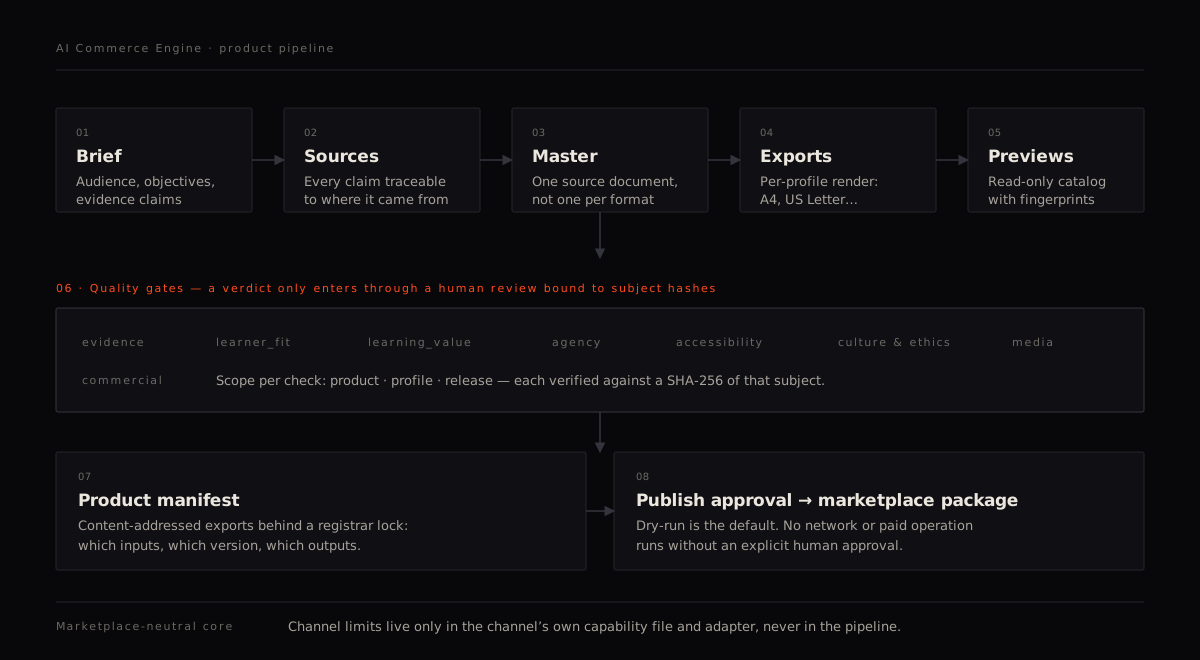
Dry-run is the default: nothing paid or networked happens without an explicit approval, and a verdict only enters the record bound to a hash.
What I tried
Put the whole thing behind gates: generation, then export into multiple formats, then automated quality checks, then a manifest recording which inputs and which pipeline version produced which outputs.
What happened
The generative step turned out to be the least difficult part. Export correctness, validation and reproducibility took the real work.
A pipeline where nothing ever fails a check turned out to be a warning sign rather than a success: it meant the checks were not testing anything.
Next question
Which failures can only be caught by a person, and how should the pipeline route those rather than pretend to decide them?